Her sisters secret a com.., p.1
Her Sister’s Secret: A completely gripping psychological thriller full of suspense, page 1
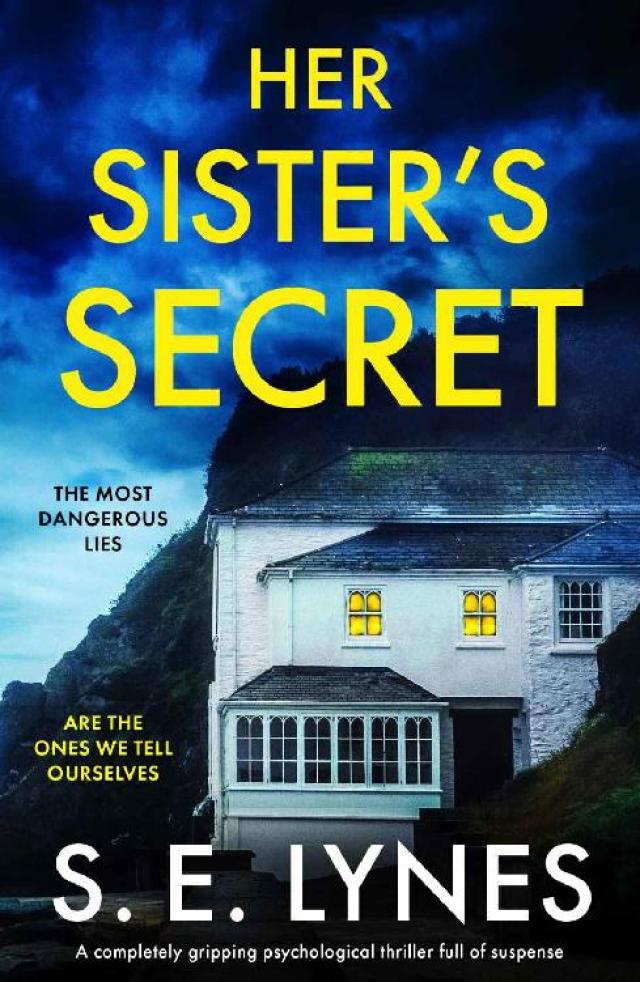


Her Sister’s Secret
A completely gripping psychological thriller full of suspense
S.E. Lynes
Books by S.E. Lynes
The One to Blame
The Housewarming
Can You See Her?
The Lies We Hide
The Women
Valentina
The Proposal
The Pact
Mother
Available in audio
The Housewarming (Available in the UK and the US)
Can You See Her? (Available in the UK and the US)
The Lies We Hide (Available in the UK and the US)
The Women (Available in the UK and the US)
The Proposal (Available in the UK and the US)
The Pact (Available in the UK and the US)
Mother (Available in the UK and the US)
Contents
Part I
1. Isla
2. Isla
3. Isla
4. Annie
5. Isla
6. Annie
7. Isla
8. Isla
9. Isla
10. Isla
11. Annie
12. Isla
13. Annie
14. Isla
15. Isla
16. Isla
17. Annie
18. Isla
19. Isla
20. Annie
21. Isla
22. Annie
23. Annie
24. Isla
25. Annie
Part II
26. Isla
27. Isla
28. Annie
29. Isla
30. Annie
31. Annie
32. Isla
33. Annie
34. Isla
35. Isla
36. Isla
37. Annie
38. Isla
39. Annie
40. Isla
41. Isla
42. Annie
43. Isla
44. Isla
Part III
45. Isla
46. Isla
47. Isla
48. Isla
49. Isla
50. Isla
51. Annie
52. Isla
Epilogue
The Housewarming
Hear More from S.E. Lynes
Books by S.E. Lynes
A Letter from S.E. Lynes
Can You See Her?
The Lies We Hide
The Women
Valentina
The Proposal
The Pact
Mother
Acknowledgements
*
For Dr Sara Bailey, aka Sally Miller – my first ever writing tutor, mentor and friend
Part 1
1 Isla
January 2005
In my hands is a black-and-white photograph of my sister and me as kids. I remember this picture being taken so vividly. We were in the back garden of our parents’ wee white house in our wee white town on the edge of Loch Fyne. Inveraray. West coast of Scotland. Our dresses are home-made, floral, real Sound of Music curtain jobs. My mother didn’t make them out of actual curtains, I don’t think. She probably made them from one of her old dresses, some sixties creation – she was always making new clothes from old, making repairs, making do. This will have been ’73, ’74. Annie was about eight, myself about three. I was still a younger sister then. I was still a sister.
I look out over her garden, cleared now of the black wreckage beyond the apple tree. The last time I saw my sister was here, almost two years ago now. The apples were still hard and small, the wasps still feisty, the days long and warm. I always loved coming to her cottage – the change of pace, the air, the sea. Four months have passed since I got that terrible call, and part of me still finds it impossible to believe I will never see her again. The fire, what came after the fire, the reality of my sister’s life, her death – the truth has fallen in slow rain. Even now, I know I have yet to turn my face to its last acid drops.
My eyes return, can’t help but return, to the photograph. It’s our chubby knees that make my eyes prick – legs locked with the effort of standing nicely for my dad’s Kodak Brownie. Photos were a rare thing, to be stuck into the album with tiny white adhesive corners that would yellow over time, lose their glue and fall off. Our entire family history contained in one battered cardboard book.
We will have had to brush our hair. Will have put on those dresses especially for this moment. Come out into the garden where it’s light. It was probably someone’s birthday.
‘Stand nicely,’ Dad will have said, arranging us in front of the best flower bed, heels sinking into the damp grass as he backed away. ‘That’s it.’ Raising the camera to his face, remembering his glasses, pushing them onto his head before pressing his eye to the viewfinder once again. ‘After three,’ he’ll have said. ‘And one, two, three… say cheese.’
‘Cheeeeeese.’
One shot. Don’t want to waste the film. We wouldn’t have thought for one second about what we looked like. Wouldn’t have seen the image for another year, maybe two, once the film was full and had been taken to Boots to be developed.
The dog-eared photo quivers in my hand. How short, how uneven, how adorable are the fringes of our practical bobs, chopped by my mother with the kitchen scissors. Saying cheese, holding hands, we are thrilled with ourselves. We are marvellous, we are smart. My sister’s knuckles are white – a tight grip. Five years older, she was proud, overprotective. She was also bonkers. I say it with love, but Lord, she was a case right enough.
Back then, Annie was the boss of me. If she’d told me to put my hand in the fire, I would have, no bother. It would be another eight years before our roles began to switch, before I became the elder, in a sense; not that I knew it was happening, not then. The change was slow, but I think now it began the night she crept down the creaking wooden steps of our bunk bed, shook me by the shoulder and whispered my name.
‘Isla.’
I blinked awake, startled at the white-nightdress ghost, calmed when I realised it was her: solid, alive, bent almost double. She was crying.
‘Annie?’ I whispered, nerves rising. ‘What’s the matter?’
‘I think I’m pregnant.’
‘Pregnant? Like with a baby? How?’
‘I got carried away,’ she wept into her hands.
Carried away. In my mind bloomed the image of her netted inside a drawstring sack slung over the shoulder of a bony hunchbacked thief who looked exactly like the Child Catcher from Chitty Chitty Bang Bang. I didn’t say any of this of course. I was rising to the gravity of the occasion.
‘Who with?’ It was the most grown-up question I could think of.
She let out a quiet howl, like our dog when Mum played hymns on the piano. ‘His name was Malcolm.’
‘Malcolm what?’
‘I don’t know.’ She burst into fresh tears. ‘He was through from Glasgow. What am I going to do? I’m still at school.’
She was not quite sixteen. That means she was fifteen obviously. To protect ourselves, I suppose, we never said it like that, even years later. The shock of it is stronger now in retrospect, with hindsight’s understanding of the implications. Getting pregnant at that age in that place with those parents would define her whole life and, I can’t help but think – today of all days – her death. But I was ten and she was fifteen, both of us far too young to grasp all that, though the enormity of what she was telling me is something I am still able to feel bodily – that strange heat: part dread, part exhilaration.
‘It’ll be all right,’ I said, solemn as a judge. ‘I’ll help you.’
But neither of us knew what help meant. Even when I made my trip to the mobile library that week and scanned a book on reproduction hidden behind the pages of the world atlas – arms shaking with the effort of holding the weight of both because I could not take a book about sex home, could not even think about our parents finding it hidden in our shared room – still I could not figure out the information I needed to help her. I thought I’d heard something about hot baths, but I had no idea where or who from. Weeks later, desperate, Annie asked me to steal vodka from my best friend Rhona’s house (our parents didn’t keep alcohol at home). I did it. Shaking with the sin, I did it, for my big sister. I was the hero of the story, the angel, the avenger – me, Isla Andrews: hold my coat, I’m going in. Only I had to tell Rhona the secret because I needed her help. Together we emptied the vodka into a soup flask I’d brought from home. We had to top up the bottle with mineral water because the tap water in our town was a wee bit brown owing to it coming from the hills.
The next night, our parents asleep, I sat on the bathroom floor while my sister climbed weeping into a scalding bath, neat vodka in a mug with her name in pink calligraphy on the side –the words gracious and merciful beneath, which is what all lassies called Annie are supposed be, according to that mug.
She raised it to her lips but lowered it almost immediately.
‘I can’t,’ she wept. ‘I just can’t do it.’
She was so distraught, I had to help her up to her bunk and stroke her hair while she fell asleep. In the morning, she still didn’t feel well. I think she’d upset herself so badly she’d g
And so the bump got bigger. Annie wore loose clothes – big sweatshirts, jeans unbuttoned at the waist. Rhona had crossed her heart and hoped to die, but she must’ve told just one other person, who promised to take it to their grave, and that one person told maybe two others in absolute confidence, who in turn swore they were tombs, absolute tombs, but who told maybe four more, but it didn’t come from them, all right? That’s how it is with secrets: they dilute. Your own is the strongest possible concentration, someone else’s already weaker, and so on until the secret is water running as freely through the village as from a burst main. And then everyone knew, and someone told my mother – low whispers over the counter of our gift shop, dark clouds gathering overhead.
Growing up, there’d always been terrible scenes between my sister and my parents. She was always disappointing them or cheeking them or doing too much on a Sunday or giggling in church or staying out later than she was allowed or being seen with a boy at the one dismal bus shelter or, later, giddy on one too many ciders down at The George. It doesn’t take a psychologist to see that I grew up to be cautious because Annie was always so bloody reckless. It was me quaking on the pew every Sunday – for her sins, not mine; her who took no notice of the fire or the brimstone; me who was ‘a good wee girl’; her who was ‘trouble’. That cape I had been trying on for years fitted, became comfortable, impossible to take off. I was the counterbalance for my beautiful, wild, impetuous sister, whose refusal to be contained turned out to be the very sealing of her containment.
But the night she told our parents, there was no terrible scene. No raised voices, no slammed doors, no cries of:
I hate you!
Mind your tone, young lady!
I can’t wait to leave this place!
Well, we’ll be putting you out in the morning, so off you go and pack a bag…
From the hallway, the only sound, beneath the high intermittent sobs from our mother, in tones so low and calm I could only just hear with one ear pressed against the living-room door, was my father’s voice: ‘You’ve made your bed now, right enough. You’re going to have to lie in it.’
They didn’t send her away like that other lassie whose name I forget but who we never saw again. Instead, over the weeks and months that followed, Dad cleared out the storage space above the shop and had a bathroom and a small kitchen put in. This astonished me, because from the way we lived, I’d always assumed we were poor. And in all of this, my sister: walking down High Street with people staring at her as if she’d been stripped naked and paraded before the eyes of the entire town. Shame. Shame on you. We know what you’ve been doing. Slut. Slattern. It’s hard to believe people still thought like that in 1981, but they did – some still do. Meanwhile, Malcolm, whoever and wherever he was, continued his life exactly as before. Even now, especially now, when I think of what she went through so young, I feel the burn of injustice on her behalf. But she bore it in silence, head tipped ever so slightly back, refusing absolutely to bow in any kind of gesture of penance. She toughed it out.
And then came my nephew, my tiny, raven-haired, pale-skinned Callum, lilac thumbprints under his eyes, mouth like a miniature rose. He looked, apparently, just like his father.
‘I want you to be his guardian,’ Annie said to me the day he was born. We were in the cottage hospital after a labour so quick he almost landed on the floor of the shop. In the bed, Annie looked peely-wally. I stood guard between her and the wooden crib where her brand-new boy slept with his fists raised above his head. Our parents had softened by then. Callum had thawed them simply by turning up.
‘I’ve told Mum and Dad I’m an atheist,’ Annie said – I can still remember the scandalised thrill that coursed through me. ‘They’ll have him christened all the same, you can bet on that. They’ll make me go for the sake of their reputation, and sure enough, I’ll go. But they don’t get to say what goes on in here.’ She jabbed her forehead hard with her forefinger, her nose and eyes wrinkled up tight. ‘So this arrangement would be between us. You would be Callum’s official guardian. I’ll write it down on a piece of paper and we can both sign it and then it will be a legal document, OK?’
On the woollen blanket, her warm, dry hands wrapped themselves around mine. Filled with the kind of seriousness that follows a huge bestowing of faith, I gave a grave nod. I had no idea what she was asking of me, only that it was big and that I was the only person in the world who could do it.
‘Yes,’ I said, but then blew it by asking her what a guardian was.
‘It’s the person who’ll look after Callum if anything ever happens to me.’
Heart quickening, I searched her face. ‘Why? Is something going to happen to you?’
She laughed; her near-white blonde hair fell across her face. ‘Of course not, you wee daftie! Nothing’s going to happen to me. It’s just… in case. If I, y’know, die or something.’
‘You’re not going to die, are you?’
‘No! No, no, no! It’s for, you know, when we’re grown up. If I died, you’d be Callum’s mummy. But I won’t die obviously. Promise.’
What promises we made. Promises we couldn’t keep, as it turned out.
Annie was devoted to Callum. But I soon saw how she’d changed. How she was changed. She was… diminished. I wish I’d been older. I wish I could’ve protected her from the judgemental stares, the whispers and the lack of support I didn’t have the experience to perceive as such. My parents were scared, I see that now. Naïve themselves, they believed absolutely they were doing what was right, teaching her to be responsible and to take the consequences of her actions. They were ignorant of how she might have continued to educate herself with a small child in tow. She did educate herself, in a way, continuing to read voraciously, and to paint the landscape of our homeland as a way of surviving, particularly once Callum started school. But in those early years, I would go to her flat after I’d finished my homework and hang out with her and my shiny new nephew. I’d take Cal for walks and show him off to those who had been so damning but who had knitted cardigans and blankets for him and dropped them off at the shop. I would see their cold eyes warm at the sight of my nephew, with his shock of black hair, his green eyes, his wee rosebud mouth.
‘We’ll bring him up together,’ I promised her, all through my teenage years. ‘We’ll run the shop when Ma and Pa retire and we’ll live next door to one another. I’ll have children too and we’ll be Auntie Annie and Auntie Isla.’
More promises broken.
But this photograph was taken before all that, at a time when we saw the world only as a place to stand in frocks made from old bits of fabric, a simple place, a safe place, in shades of black and white. I slide it into our father’s old wallet, which I kept back from our parents’ things. Their funeral was the second-to-last time I saw Annie. I took her pallor for grief, her weight loss for a life running a business and running round after Cal. I know differently now. I know I failed her. I know I should have been more vigilant. I know I should have watched over her better.