Mystery Walk

Mystery Walk

Robert McCammon

Literature & Fiction / Horror / Historical Fiction

One talks to the dead. The other heals the living. Both must make the . . . "Mystery Walk" From deep within the empty house of a murdered family, Billy Creekmore hears his name whispered. . . and is drawn inside. At a revival meeting in Alabama, Wayne Falconer demonstrates his miraculous healing powers. . . while demons feast and grow in his soul. On separate journeys through the Deep South to Chicago, from a world of innocence to a world of evil, greed and lust, the two young men discover their manhood - and fuel a deadly rivalry. On a scorched slab of desert they will meet in fear and unite their extraordinary powers against a raging, unshackled spirit - the walking, hungry corpse of the Shape Changer.
Read online
  • 528
Gone South

Gone South

Robert McCammon

Literature & Fiction / Horror / Historical Fiction

Flooded by memories, poisoned by Agent Orange, Dan Lambert kills a man in a moment of fear and fury -- and changes his life forever. Pursued by police and bounty hunters, Dan flees south toward the Louisiana bayous. In the swamplands he meets Arden Halliday, a young woman who bears the vivid burdens of her own past, and who is searching for a legendary faith healer called the Bright Girl. Looking for simple kindness in a world that rarely shows it, bound by a loyalty stronger than love, Dan and Arden set off on a journey of relentless suspense and impassioned discovery. . . over dark, twisting waterways into the mysterious depths of the human heart.
Read online
  • 522
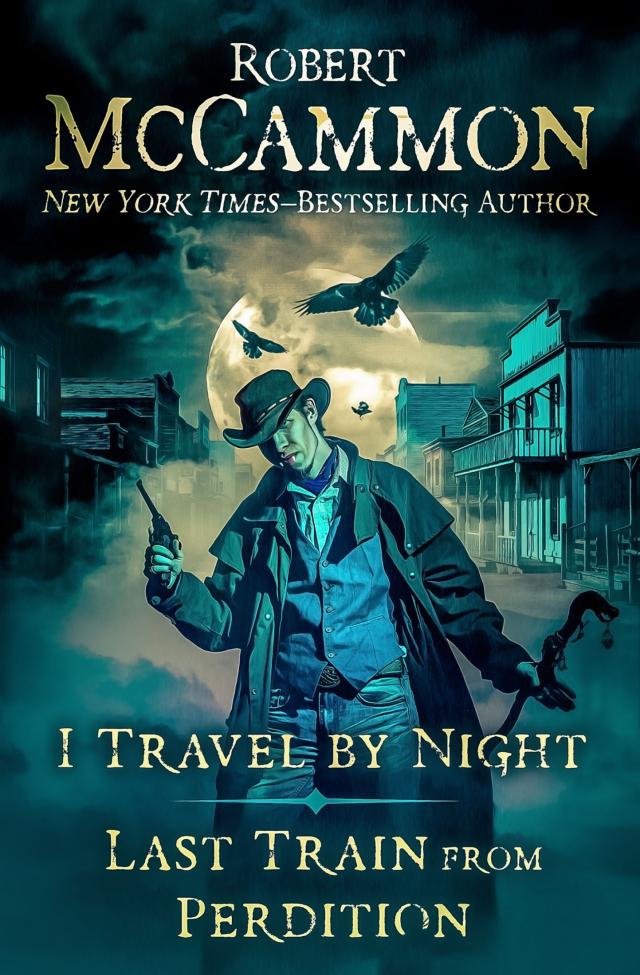
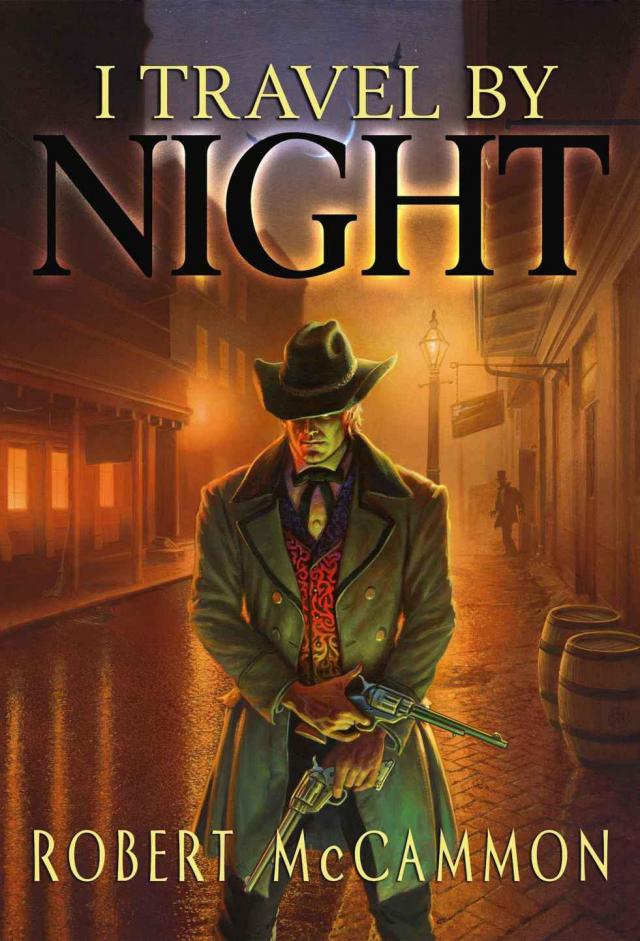
I Travel by Night / Last Train from Perdition

I Travel by Night / Last Train from Perdition

Robert McCammon

Literature & Fiction / Horror / Historical Fiction

Two short novels featuring the vampiric gunslinger who seeks vengeance and justice across the Old West, from the New York Times–bestselling master of horror. He was once a husband, father, lawyer, and Civil War soldier. Now he is a vampire struggling to hold onto his last thread of humanity—and to destroy the one who made him. In I Travel by Night, Trevor Lawson handles matters from his lair at the Hotel Sanctuaire in New Orleans. When a prominent lumber man comes to him for help—to find and free his kidnapped daughter—Trevor senses a trap, for the man who signed the ransom note is one he knows too well. Traveling towards a ghost town in the dark of the swamps, Trevor soon finds himself preparing for a final showdown against the purest form of evil in existence: the Dark Society and its bloodthirsty queen. With his new sidekick, Ann Kingsley, Trevor travels to Montana in Last Train from Perdition. When they try...
Read online
  • 377
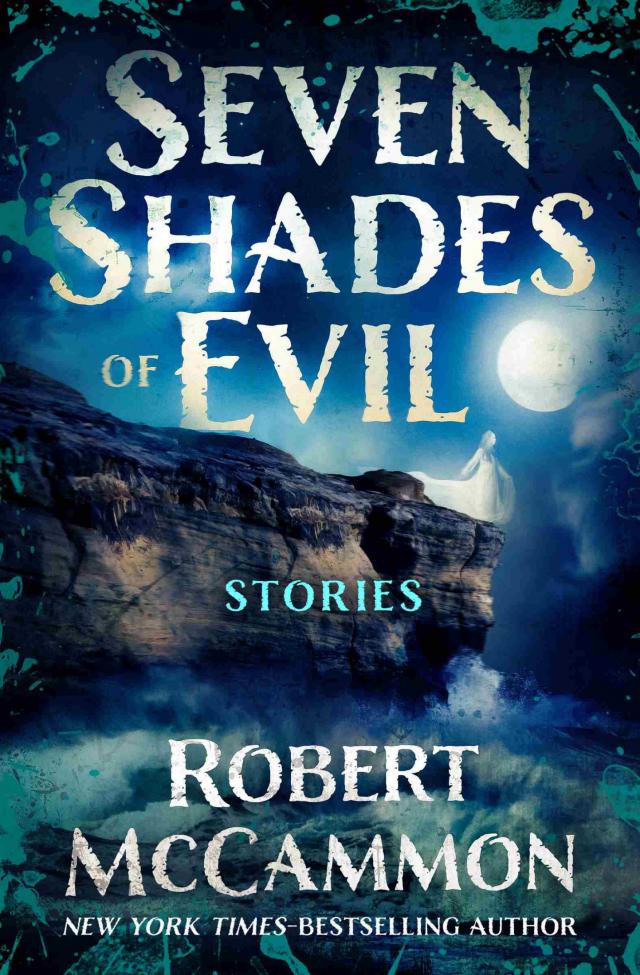
Seven Shades of Evil

Seven Shades of Evil

Robert McCammon

Literature & Fiction / Horror / Historical Fiction

The New York Times–bestselling author continues his colonial-era thriller series with eight tales of mystery, adventure, and supernatural suspense. From his first appearance in Speaks the Nightbird to his latest adventure in The King of Shadows, Matthew Corbett has faced enemies of all kinds, from serial killers to sorcerers. Now author Robert McCammon presents eight gripping stories featuring the professional problem solver and his associates that take place between the popular novels.Seven Shades of Evil includes four original stories, including “Wandering Mary,” and four additional tales that previously appeared in limited form and are no longer available elsewhere. Ranging from twisting murder plots to ominous portents of the paranormal, these stories are an intriguing blend of everything that has drawn readers to the Matthew Corbett series for more than twenty years. This volume includes: •...
Read online
  • 312
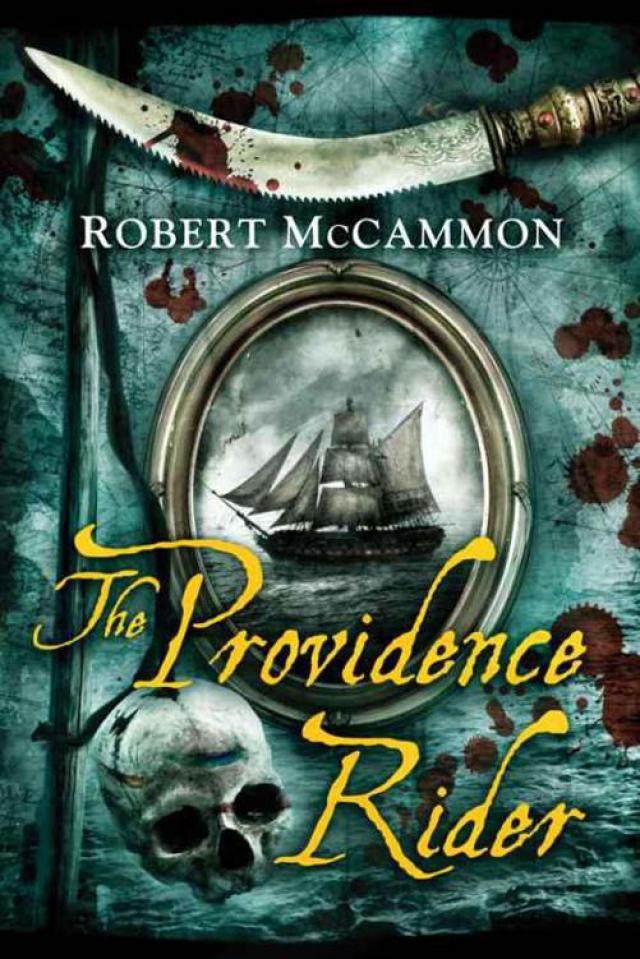
The Providence Rider

The Providence Rider

Robert McCammon

Literature & Fiction / Horror / Historical Fiction

The Providence Rider is the fourth standalone installment in the extraordinary series of historical thrillers featuring Matthew Corbett, professional problem solver. The narrative begins in the winter of 1703, with Matthew still haunted by his lethal encounter with notorious mass murderer Tyranthus Slaughter. When an unexplained series of explosions rocks his Manhattan neighborhood, Matthew finds himself forced to confront a new and unexpected problem.
Read online
  • 309
1989 - The Wolf's Hour v4

1989 - The Wolf's Hour v4

Robert McCammon

Literature & Fiction / Horror / Historical Fiction

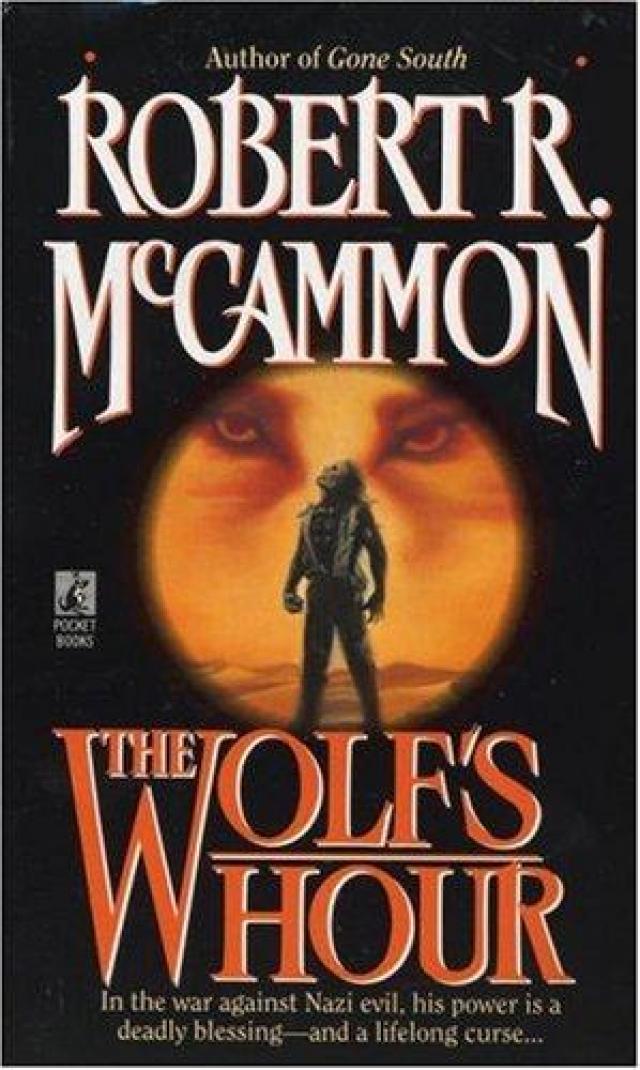
EDITORIAL REVIEW:First published in 1989, The Wolf's Hour remains one of Robert McCammon's most indelible creations. Ranging freely and with great authority through realms of history, folklore, and myth, it combines two seemingly disparate genres the World War II action thriller and the paranormal romance into a seamless, irresistible whole.McCammon's hero is Michael Gallatin, embattled inhabitant of two different worlds. Born into the Russian aristocracy, but 'changed' and raised by a pack of werewolves, Michael's journey takes him from the wild regions of his native Russia to the battle-scarred landscapes of a world at war. Offering his unique talents to the Allied cause, Michael becomes a sort of secret weapon aimed at the destruction of Hitler and his 'Thousand Year Reich.' His adventures take him from the deserts of North Africa to the German-occupied countries of Western Europe. There, with the aid of a vivid assortment of friends, comrades, and lovers, he uncovers a horrific conspiracy known as 'Iron Fist,' which threatens to disrupt the Allies' long-planned invasion of Europe and to alter the very outcome of the war.Both a scrupulously researched historical thriller and a brilliant re-imagining of the traditional werewolf tale, The Wolf's Hour offers pleasure, excitement, and illumination on virtually every page. Exotic, enthralling, and endlessly inventive, it is the work of a master storyteller in full command of his matchless narrative gifts.The Subterranean Press edition of The Wolf's Hour will feature an original introduction by Robert McCammon, as well as a full-color dust jacket and a number of color plates by Vincent Chong, including a gatefold illustration depicting the novel's famous 'death train' scene.SUMMARY:A centuries-old curse has given master spy Michael Gallatin the power to turn from a man into a snarling wolf capable of shocking savagery. Against the looming apocalypse of World War II, Gallatin faces his most dangerous mission: to unravel the secret Nazi plan known as Iron Fist. And as D-Day draws nearer, Gallatin's curse becomes the Allies' only hope! Original.About The Wolf's Hour by Robert R. McCammonI began The Wolf's Hour with the idea that I wanted to do a different kind of werewolf story, coupled with elements of romance and heroism. I wanted my werewolf to be a man who often enjoys being a creature who runs on all fours, with a keen sense of smell and vision. Sometimes, Michael Gallatin would much rather be a wolf than a human being.I also wanted to do away with some of the conventions of the werewolf tale. I didn't see any need for werewolves to be restricted to the full moon in order to change, nor did it necessarily have to be night. I wanted to create creatures who had struggled to take control of their situation rather than being at the mercy of their circumstances. Which is not to say that a werewolf's life is easy; as one of the characters says, "A werewolf never dies of old age."As much as possible, I wanted to try to make the development and life of these creatures as believable as possible. Which meant they would learn to endure extreme hardship, because how else could they live but in a wilderness environment? But I think there would be great joy in learning how to see the world as a wolf does, in learning—-and it wouldn't be easy—-how to run on all fours and use your tail as a rudder, how to hunt prey and kill it with your teeth and claws, and generally survive on a level that is at the same time both brutal and elegant.The merging of brutality and elegance is what I was trying to accomplish, and I hope it succeeded reasonably well. The Wolf's Hour is set during World War II, and goes back and forth in time to show how Michael Gallatin became a werewolf and also follows his current mission in occupied France as a British secret agent. I've been asked why I chose World War II as my time frame, and not the modern era. My answer is that the period of the second World War appears to be—-wrongly or rightly—-a very romantic time in the history of the world. Romantic, that is, in the sense that one knew who wore the black hats and who wore the white hats. It was a period of apocalyptic decisions and events, and more surely the pivotal period of the twentieth century. It seemed right for The Wolf's Hour, which is basically the tale of nature versus technology.I also grew up reading the Ian Fleming James Bond novels, and I wanted to create a character who loved life yet had no qualms about killing if the situation demanded it. Michael Gallatin is not a man who kills for pleasure, but he is certainly a dangerous man because he knows—-like the wolf does—-that killing is basic to his survival. I also wanted Michael Gallatin to be a compassionate man, in that his work and the nature of killing is not his entire focus for being. He is a professional at his craft, but he's certainly not a machine and I wanted him to have very human emotions.The Wolf's Hour is a departure for me in that it's not necessarily a horror novel, though its basis is the werewolf tale. Not horror, at least, in the supernatural sense, but the horror in The Wolf's Hour is fashioned by human hands, with a "horror genre" figure as the hero. I wanted to turn around the popular culture idea of a werewolf being a dumb brute who in the light of the full moon is compelled to rend and destroy. In The Wolf's Hour, it's the world beyond the werewolves that is brutish and destructive, while the werewolves themselves kill not for pleasure, but for survival.I enjoyed researching wolf behavior before I started the book, and I also enjoyed reading a lot of military history and data about the personalities of the era, some of whom make appearances in the book. The Wolf's Hour was fun to write, and I hope in the future to continue Michael Gallatin's story
Read online
  • 148
I Travel by Night

I Travel by Night

Robert McCammon

Literature & Fiction / Horror / Historical Fiction

I Travel by Night marks Robert McCammon's triumphant return to the sort of flamboyant, go-for-broke horror fiction that has earned him an international reputation and a legion of devoted fans. The terrors of the Dark Society, the gothic sensibilities of old New Orleans, and the tortured existence of the unforgettable vampire adventurer Trevor Lawson all combine into a heady brew that will thrill McCammon s loyal readers and earn him new ones as well.For Lawson, the horrors that stalked the Civil War battlefield at Shiloh were more than just those of war. After being forcibly given the gift of undeath by the mysterious vampire queen LaRouge, Lawson chose to cling to what remained of his humanity and fought his way free of the Dark Society's clutches. In the decades since, he has roamed late nineteenth century America, doing what good he can as he travels by night, combating evils mundane and supernatural, and always seeking the key to regaining a mortal life.That key lies with his maker, and now Lawson hopes to find LaRouge at the heart of a Louisiana swamp with the aid of a haunted priest and an unexpected ally. In the tornado-wracked ghost town of Nocturne, Lawson must face down monstrous enemies, the rising sun, and his own nature. Readers will not want to miss this thrilling new dark novella from a master storyteller.
Read online
  • 56
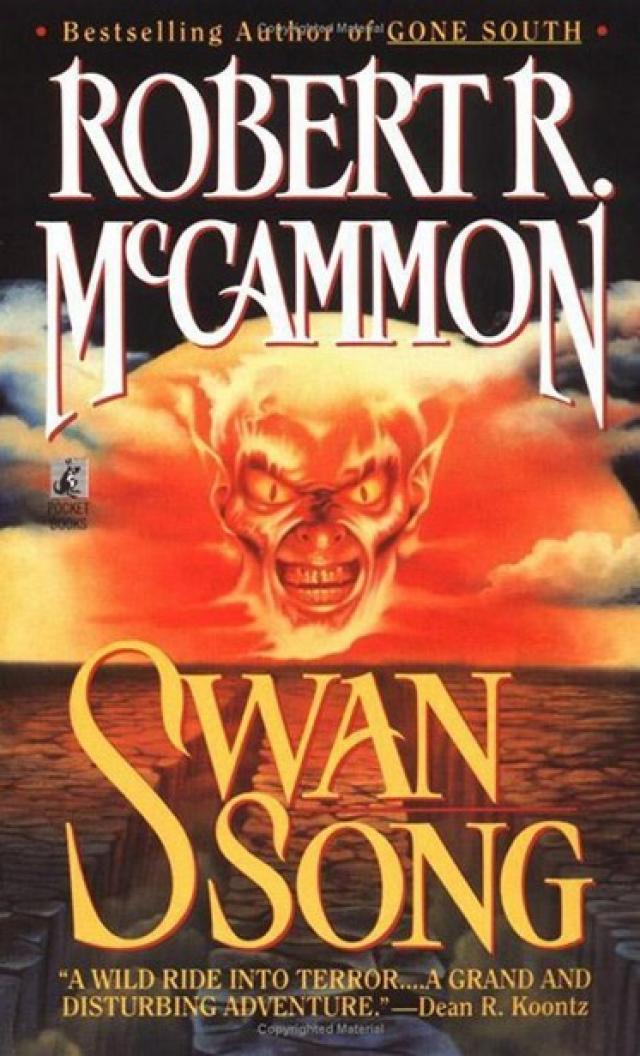
1987 - Swan Song v4

1987 - Swan Song v4

Robert McCammon

Literature & Fiction / Horror / Historical Fiction

UnknownEDITORIAL REVIEW: ***“We’re about to cross the point of no return. God help us; we’re ******flying in the dark and we don’t know where the hell we’re going.” ***Facing down an unprecedented malevolent enemy, the government responds with a nuclear attack. America as it was is gone forever, and now every citizen—from the President of the United States to the homeless on the streets of New York City—will fight for survival. *Swan Song *is Robert McCammon’s prescient and “shocking” (John Saul) vision of a post- Apocalyptic nation, a grand epic of terror and, ultimately, renewal. In a wasteland born of rage and fear, populated by monstrous creatures and marauding armies, earth’s last survivors have been drawn into the final battle between good and evil, that will decide the fate of humanity: Sister, who discovers a strange and transformative glass artifact in the destroyed Manhattan streets . . . Joshua Hutchins, the pro wrestler who takes refuge from the nuclear fallout at a Nebraska gas station . . . And Swan, a young girl possessing special powers, who travels alongside Josh to a Missouri town where healing and recovery can begin with Swan’s gifts. But the ancient force behind earth’s devastation is scouring the walking wounded for recruits for its relentless army, beginning with Swan herself. . . . EDITORIAL REVIEW: ***“We’re about to cross the point of no return. God help us; we’re ******flying in the dark and we don’t know where the hell we’re going.” ***Facing down an unprecedented malevolent enemy, the government responds with a nuclear attack. America as it was is gone forever, and now every citizen—from the President of the United States to the homeless on the streets of New York City—will fight for survival. *Swan Song *is Robert McCammon’s prescient and “shocking” (John Saul) vision of a post- Apocalyptic nation, a grand epic of terror and, ultimately, renewal. In a wasteland born of rage and fear, populated by monstrous creatures and marauding armies, earth’s last survivors have been drawn into the final battle between good and evil, that will decide the fate of humanity: Sister, who discovers a strange and transformative glass artifact in the destroyed Manhattan streets . . . Joshua Hutchins, the pro wrestler who takes refuge from the nuclear fallout at a Nebraska gas station . . . And Swan, a young girl possessing special powers, who travels alongside Josh to a Missouri town where healing and recovery can begin with Swan’s gifts. But the ancient force behind earth’s devastation is scouring the walking wounded for recruits for its relentless army, beginning with Swan herself. . . . I've always thought that any kind of film based on a book or short story can be a fascinating experience for the author---not necessarily because the film is good or bad, but because it's a reflection of how other people visualize the author's words. A writer creates the word pictures, and then people who weren't directly involved in that creation process have the task of making the word pictures solid. But I think the real challenge of being a writer is to create a mental movie: doing the lighting, the costumes, the casting and makeup, the special effects, the directing and making sure all the props are there on cue. I hope the readers do approach my books as films, that they can see in their minds as they read. The devil, it's been said, is in the details. If the details aren't there, a scene often lacks vitality. Which is a long way of getting around to writing that the illustrated version of Swan Song has just been published by Dark Harvest, and it was an interesting experience for me to see how an artist visualized scenes from the mental movie I'd created. The details are right. If something was in the scene, it's there in the illustration. So I want to thank Paul Mikol and the two artists who worked on the book, Charles and Wendy Lang, for an excellent job. Paul Mikol promised me Dark Harvest's production of Swan Song would be a quality work, and the Langs added an extra dimension of quality that I feel very, very proud about. All books are like children. They develop their own personalities as they're written. Some of them are sweet and gentle, others are nasty bullies, some don't want to grow up, others jump ahead so fast they pull you along by the throat. This, strangely enough, has nothing to do with length or complexity. It just is. No book I've ever written has been born in quite the same way, though my work patterns don't vary. Swan Song was a relatively easy birth, in that it flowed smoothly from beginning to end. Stinger was a beast; about sixty pages from the end, I realized I'd made a major goof and had to go back two hundred pages and start from there again. Usher's Passing almost put me under, but Mystery Walk was easy. The Wolf's Hour was really fun to do, probably the easiest birth of all even though it went back and forth between time periods. But my latest book---called MINE---was much tougher, even though the story is simple and straight-ahead. So it's hard to tell what the child will be like until you get into the birthing process. You just have to grit your teeth, hope for the best, and prepare to face the detail devil again. I was asked to talk about how and why I wrote Swan Song. I'd like to tell you why I don't want to do that. Swan Song, even though the new hardback version is out and it looks terrific and I hope it does very well, is ancient history to me. I got a letter not long ago addressed to Robert "Mr. Swan Song" McCammon. Now: let me say first of all that I'm really, really glad readers responded to Swan Song, and that the book continues to speak to people about hope in a world where hope seems to be a dirty word. That's great---but I'm not satisfied. I want more. Not more money, not more fame, not movies and "celebrity status." I want more from myself, and I don't plan on letting anybody believe for a second that Swan Song is going to be a laurel wreath on my head. I'm going to write better books. I'm going to write ones not as good. But the point is, I'm going to write different books. Many people have written urging me to do a sequel to Swan Song. I leave most of my books open for sequels---not so I can write them, but so readers can carry the story line further along in their imaginations. Sequels are never as good as originals, and almost always disappointing. Having said that, I also have to say that I am kicking around the idea of doing a sequel to The Wolf's Hour in three or four years. I would do it because I really enjoyed writing the original, because I would have something different to say, and because I might be interested in doing a series of books that span the continuation of Michael Gallatin's line into modern times. It would not be The Wolf's Hour Part II. Believe it. For me, writing is a great freedom. I don't use an outline. I don't usually know what's going to happen from one point to another, though I develop what I call "signpost scenes" as a kind of free-form roadmap. Writing is a great adventure, a journey of faith into the unknown. Sometimes it's a night trip, and you lose your way for a while. But when you get to your destination, and see the home fires burning, the joy is beyond description. I almost gave it up, a while back. I got really tired of hearing things like "the poor man's Stephen King," and that I was "walking on King and Straub's territory," that I was a rip-off artist and a hack with no style of my own. I almost said to hell with it, and for a while I was looking through the want ads trying to figure what else I could do. When I reached the bottom of that particular pond, I realized there was nothing else I could do besides write. For better or worse, I was married to writing, and I had to keep going no matter what was shoveled at me. So here we are. I'm not always going to write horror novels. The new book, MINE, isn't a horror novel in the supernatural sense, though it certainly is horror in the real world. I may do a fantasy novel next. I have a science-fiction book in the early stages. I'm planning on doing a love story---of a sort---set in the 1600s. I may do a book of the further adventures of Poe's detective, Dupin. Whatever: the point is, writing is the freedom to go and do and be and see, and I have no idea of where the boundaries lie. As I said before, I might write books that are better than others, but of one thing I'm certain: I won't repeat myself. Neither will I stop trying to become a better writer. Easy to say, hard to do. I know where the want ads are; I've seen their gray solemnity and invitation into a world of locks and keys. I can't live there. Again, I want to thank Paul Mikol and the Langs for an excellent job on Dark Harvest's production of Swan Song. And for knowing that the devil is in the details. What's past is preface. We go from here.
Read online
  • 46
1990 - Mine v4

1990 - Mine v4

Robert McCammon

Literature & Fiction / Horror / Historical Fiction

Amazon.com ReviewRobert McCammon asks, "What happened to those children of the sixties who learned the language of hatred, who swore oaths upon their bloodstained manifestos and vowed to never surrender?" Most went on to other lifestyles. But Mary Terrell, a.k.a. "Mary Terror," did not change. Her insanity deepened into schizophrenia, and in the late '80s she still calls herself "freedom fighter for those without rights in the Mindfuck State." Hallucinating, heavily armed, and possessed by the delusion that an infant son will restore the good ol' days with her ex-lover, Mary steals a baby. But the child's mother is a strong, resourceful woman, and she recruits an ex-radical to help her. What ensues is a hair-raising chase across the American Midwest in wintertime, toward a final confrontation in which both "mothers" proclaim, "He's mine." Not only is Mine an intense horror novel (winner of a Bram Stoker Award), but refreshingly, all three main characters are women. From Publishers WeeklyA psychotic leaves a trail of murder victims in her wake after she kidnaps a newborn child and goes off to join a revolutionary group to which she belonged during the '60s. Although McCammon portrays his left-wing characters as motivated by adolescent rebellion rather than by radical politics, "he delivers an expertly constructed novel of suspense and horror," said PW. Copyright 1991 Reed Business Information, Inc.
Read online
  • 28
183