Sexus

Sexus

Henry Miller

Literature & Fiction

Praise for Henry Miller: 'American literature begins and ends with the meaning of what Miller has done.' Lawrence Durrell 'I regard Henry Miller as a master.' Colin MacInne Praise for 'Sexus': 'A huge, sprawling narrative of Miller's life in New York, "Sexus'"culminates in a description of an orgy as remarkable for its account of the author's powers of sexual endurance as for its versatility. Interspersed are descriptions of his friends, some of them extremely funny and all of them lively. The lack of inhibition and genteel or moral restraint with which Miller describes these various characters gives "Sexus" a unique vitality. Miller cannot be pompous, a rare virtue, and his honesty is absolute.' Spectator
Read online
  • 1 206
The Wisdom of the Heart

The Wisdom of the Heart

Henry Miller

Literature & Fiction

In this selection of stories and essays, Henry Miller elucidates, revels, and soars, showing his command over a wide range of moods, styles, and subject matters. Writing “from the heart,” always with a refreshing lack of reticence, Miller involves the reader directly in his thoughts and feelings. “His real aim,” Karl Shapiro has written, “is to find the living core of our world whenever it survives and in whatever manifestation, in art, in literature, in human behavior itself. It is then that he sings, praises, and shouts at the top of his lungs with the uncontainable hilarity he is famous for.” Here are some of Henry Miller’s best-known writings: an essay on the photographer Brassai; “Reflections on Writing,” in which Miller examines his own position as a writer; “Seraphita” and “Balzac and His Double,” on the works of other writers; and “The Alcoholic Veteran,” “Creative Death,” “The Enormous Womb,” and “The Philosopher Who Philosophizes.”
Read online
  • 1 108
Moloch: Or, This Gentile World

Moloch: Or, This Gentile World

Henry Miller

Literature & Fiction

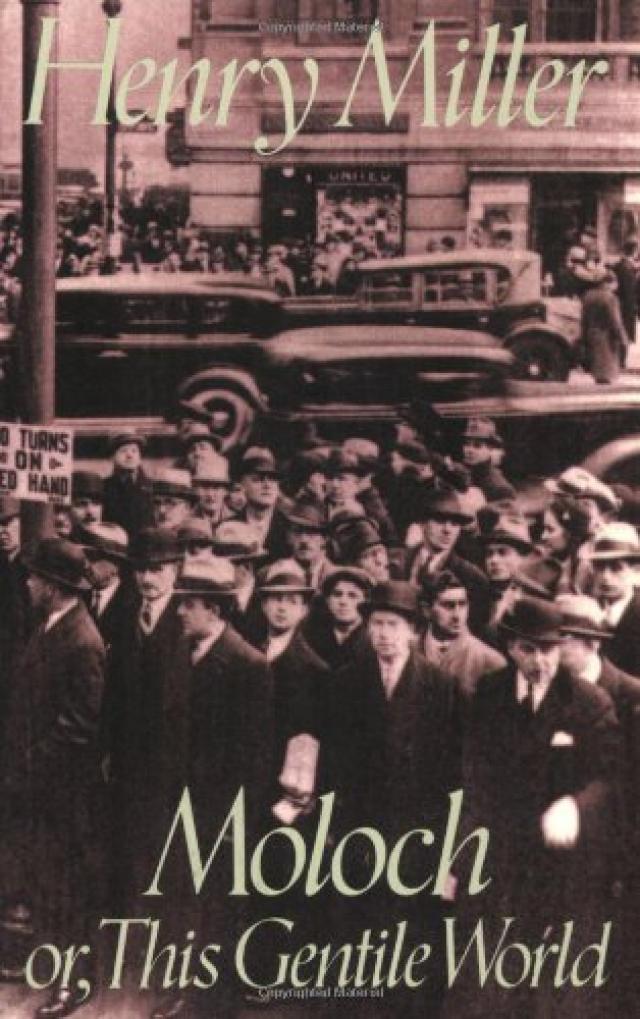
Uncovered along with Crazy Cock in 1988 by Miller biographer Mary V. Dearborn, Moloch emerged from the misery of Miller's years at Western Union and from the squalor of his first marriage. Set in the rapidly changing New York City of the early twenties, its hero is the rough-and-tumble Dion Moloch, a man filled with anger and despair. Trapped in a demeaning job, oppressed by an acrimonious home life, Moloch escapes to the streets only to be assaulted by a world he despises even more — a Brooklyn transformed into a shrill medley of ethnic sights, sounds, and smells. The antagonized Moloch strikes out blindly at everything he hates, battling against a world whose hostility threatens to overwhelm and destroy him.
Read online
  • 1 067
Plexus

Plexus

Henry Miller

Literature & Fiction

Second volume in the Rosy Crucifixion series. More about Henry and June, also chronicling the author's travels to the deep South, and his work as an encyclopedia salesmen (after he'd left personnel).
Read online
  • 990
The Colossus of Maroussi

The Colossus of Maroussi

Henry Miller

Literature & Fiction

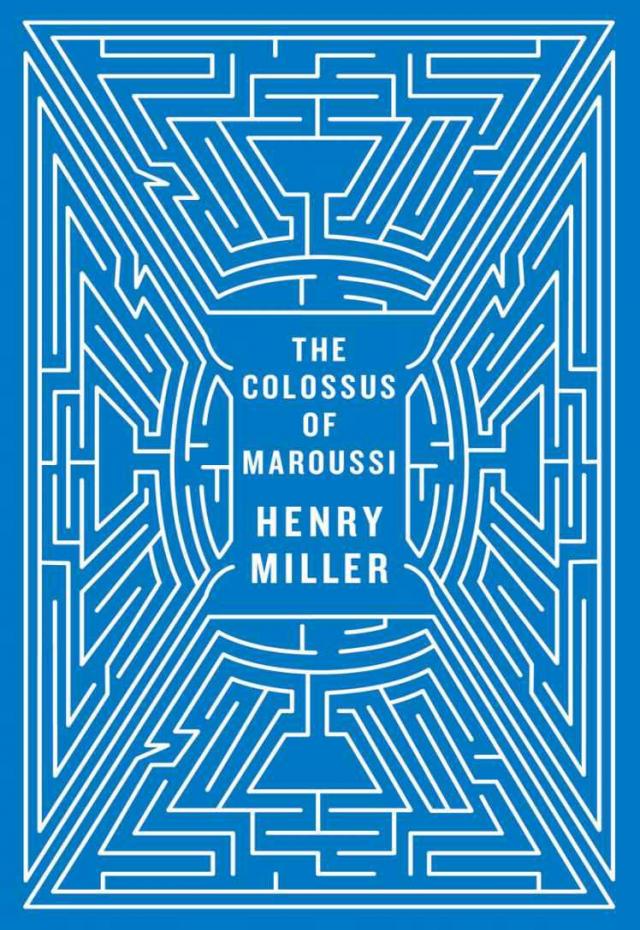
The Colossus of Maroussi is an impressionist travelogue by Henry Miller, written in 1939 and first published in 1941 by Colt Press of San Francisco. As an impoverished writer in need of rejuvenation, Miller travelled to Greece at the invitation of his friend, the writer Lawrence Durrell. The text is inspired by the events that occurred. The text is ostensibly a portrait of the Greek writer George Katsimbalis, although some critics have opined that is more of a self-portrait of Miller himself.[1] Miller considered it to be his greatest work.
Read online
  • 779
Crazy Cock

Crazy Cock

Henry Miller

Literature & Fiction

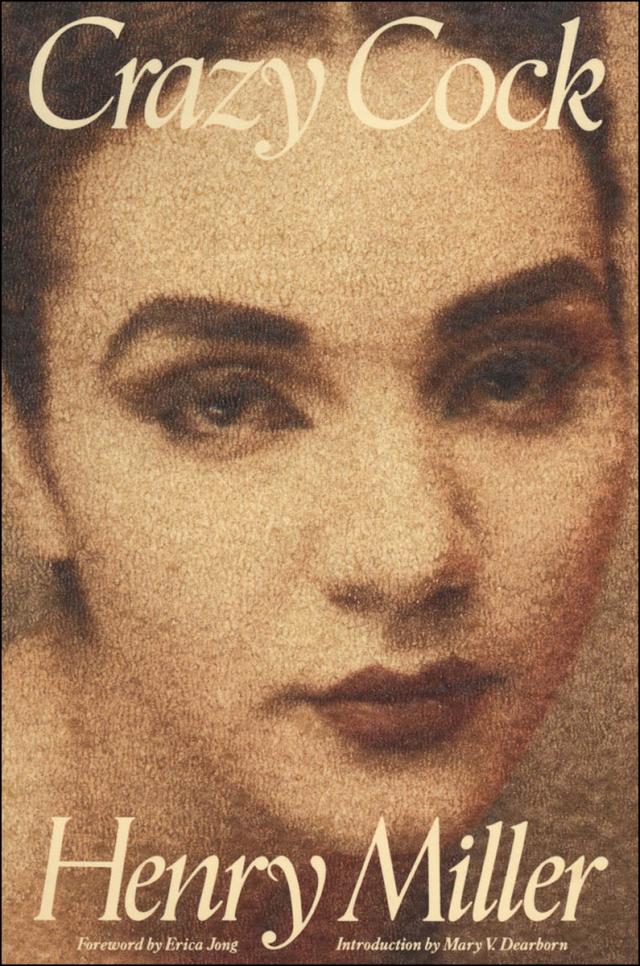
In 1930 Henry Miller moved from New York to Paris, leaving behind — at least temporarily — his tempestuous marriage to June Smith and a novel that had sprung from his anguish over her love affair with a mysterious woman named Jean Kronski. Begun in 1927, Crazy Cock is the story of Tony Bring, a struggling writer whose bourgeois inclinations collide with the disordered bohemianism of his much-beloved wife, Hildred, particularly when her lover, Vanya, comes to live with them in their already cramped Greenwich Village apartment. In a world swirling with violence, sex, and passion, the three struggle with their desires, inching ever nearer to insanity, each unable to break away from this dangerous and consuming love triangle.
Read online
  • 722
Quiet Days in Clichy

Quiet Days in Clichy

Henry Miller

Literature & Fiction

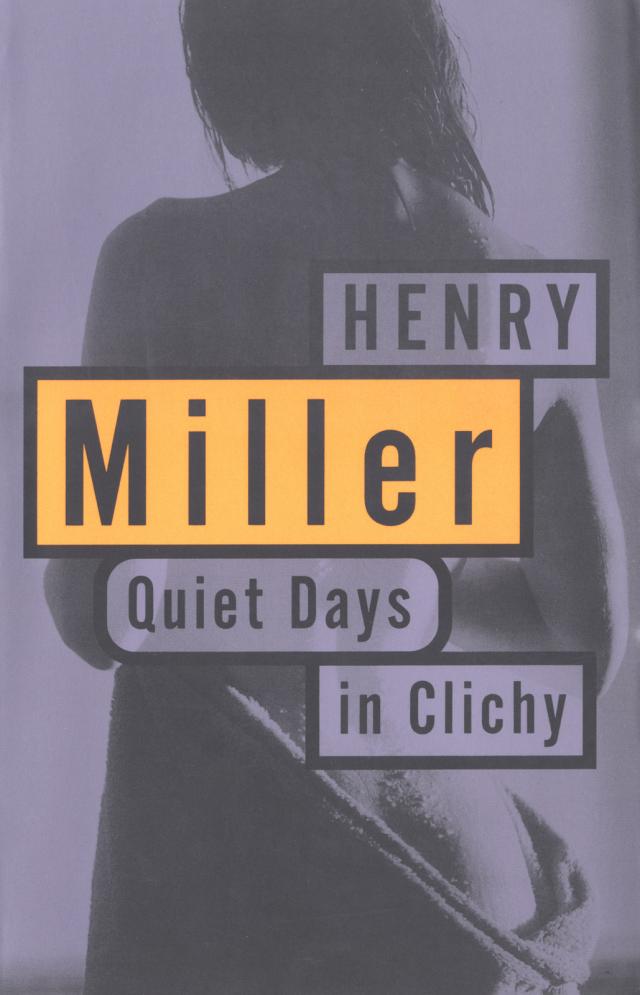
This tender and nostalgic work dates from the same period as Tropic of Cancer (1934). It is a celebration of love, art, and the Bohemian life at a time when the world was simpler and slower, and Miller an obscure, penniless young writer in Paris. Whether discussing the early days of his long friendship with Alfred Perles or his escapades at the Club Melody brothel, in Quiet Days in Clichy Miller describes a period that would shape his entire life and oeuvre.
Read online
  • 642
Tropic of Cancer

Tropic of Cancer

Henry Miller

Literature & Fiction

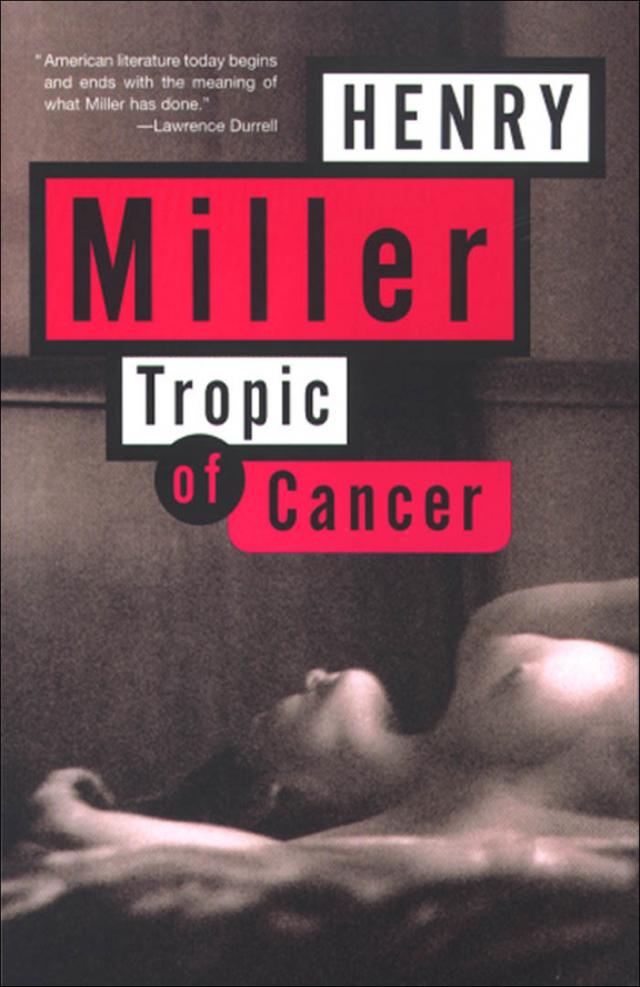
Now hailed as an American classic, Tropic of Cancer, Henry Miller’s masterpiece, was banned as obscene in this country for twenty-seven years after its first publication in Paris in 1934. Only a historic court ruling that changed American censorship standards, ushering in a new era of freedom and frankness in modern literature, permitted the publication of this first volume of Miller’s famed mixture of memoir and fiction, which chronicles with unapologetic gusto the bawdy adventures of a young expatriate writer, his friends, and the characters they meet in Paris in the 1930s. Tropic of Cancer is now considered, as Norman Mailer said, "one of the ten or twenty great novels of our century."
Read online
  • 626
Nexus

Nexus

Henry Miller

Literature & Fiction

Nexus, the last book of Henry Miller's epic trilogy The Rosy Crucifixion, is widely considered to be one of the landmarks of American fiction. In it, Miller vividly recalls his many years as a down-and-out writer in New York City, his friends, mistresses, and the unusual circumstances of his eventful life.
Read online
  • 610
Tropic of Capricorn

Tropic of Capricorn

Henry Miller

Literature & Fiction

Banned in America for almost thirty years because of its explicit sexual content, this companion volume to Miller's Tropic of Cancer chronicles his life in 1920s New York City. Famous for its frank portrayal of life in Brooklyn's ethnic neighborhoods and Miller's outrageous sexual exploits, Tropic of Capricorn is now considered a cornerstone of modern literature.
Read online
  • 458
Black Spring

Black Spring

Henry Miller

Literature & Fiction

Continuing the subversive self-revelation begun in Tropic of Cancer and Tropic of Capricorn, Henry Miller takes readers along a mad, free-associating journey from the damp grime of his Brooklyn youth to the sun-splashed cafes and squalid flats of Paris. With incomparable glee, Miller shifts effortlessly from Virgil to venereal disease, from Rabelais to Roquefort. In this seductive technicolor swirl of Paris and New York, he captures like no one else the blending of people and the cities they inhabit.
Read online
  • 403
The Smile at the Foot of the Ladder

The Smile at the Foot of the Ladder

Henry Miller

Literature & Fiction

Henry Miller called The Smile at the Foot of the Ladder his "most singular story." First published in 1959, this touching fable tells of Auguste, a famous clown who could make people laugh but who sought to impart to his audiences a lasting joy. Originally inspired by a series of circus and clown drawings by the cubist painter Femand Léger, Miller eventually used his own decorations to accompany the text in their stead. "Undoubtedly," he says in his explanatory epilogue, °'it is the strangest story I have yet written. . . . No, more even than all the stories which I based on fact and experience is this one the truth. My whole aim in writing has been to tell the truth, as I know it. Heretofore all my characters have been real, taken from life, my own life. Auguste is unique in that he came from the blue. But what is this blue which surrounds and envelopes us if not reality itself? . . . We have only to open our eyes and hearts, to become one with that which is."
Read online
  • 304
183