Could it be magic, p.1
Could It Be Magic?, page 1
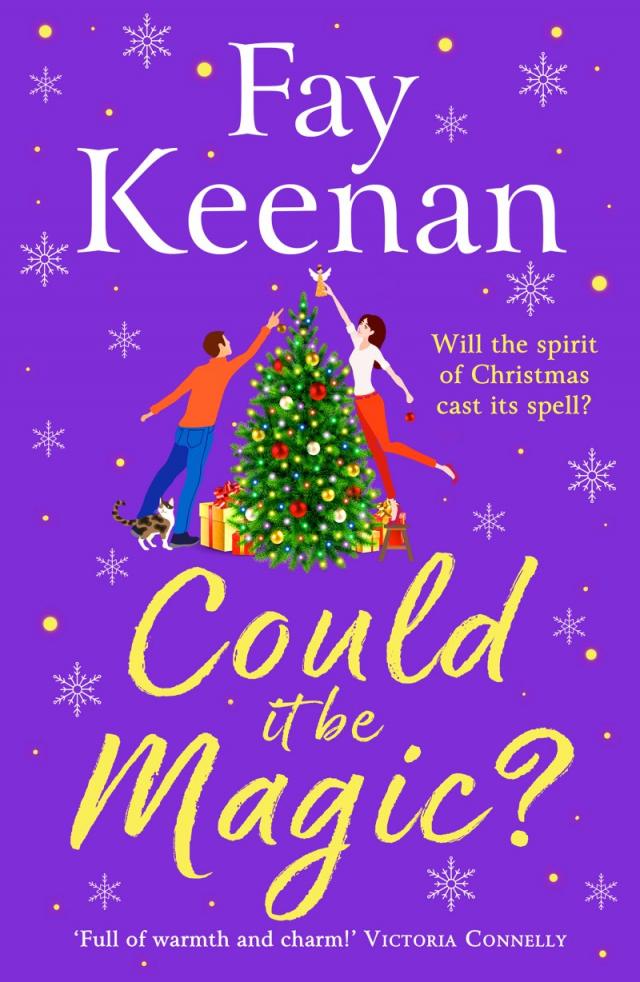


COULD IT BE MAGIC?
FAY KEENAN
For my own ‘Saint Nick’.
CONTENTS
Chapter 1
Chapter 2
Chapter 3
Chapter 4
Chapter 5
Chapter 6
Chapter 7
Chapter 8
Chapter 9
Chapter 10
Chapter 11
Chapter 12
Chapter 13
Chapter 14
Chapter 15
Chapter 16
Chapter 17
Chapter 18
Chapter 19
Chapter 20
Chapter 21
Chapter 22
Chapter 23
Chapter 24
Chapter 25
Chapter 26
Chapter 27
Chapter 28
Chapter 29
Chapter 30
Chapter 31
Chapter 32
Chapter 33
Chapter 34
Chapter 35
Chapter 36
Chapter 37
Chapter 38
Chapter 39
Chapter 40
Chapter 41
Chapter 42
Chapter 43
Chapter 44
Chapter 45
Chapter 46
Chapter 47
Chapter 48
Chapter 49
Chapter 50
Chapter 51
Chapter 52
Chapter 53
Chapter 54
Chapter 55
Chapter 56
Chapter 57
Chapter 58
Epilogue
Thank you!
More from Fay Keenan
Acknowledgements
About the Author
Also by Fay Keenan
The Shelf Care Club
About Boldwood Books
1
Your tracker mortgage rate will be rising, in line with the Bank of England’s increase of the base rate from 31 December. If you require advice or assistance about making repayments under the new rate, please feel free to contact us…
Thea Ashcombe threw the letter down on her small kitchen table in frustration. Lupin, the small tortoiseshell rescue cat she’d caved and allowed her children to adopt from the Purrfect Paws Rescue Centre regarded her warily. A feral kitten, who’d been born with her sisters under some decking and then had to fend for herself, Lupin was still nervous of sudden movements and loud noises, and although living with two affectionate children had cured her of much of that, she still jumped when caught off guard.
‘Sorry, puss,’ Thea murmured, putting out a hand and giving the top of the cat’s head a rub. Lupin nosed her affectionately, and, despite the letter from the bank, Thea relaxed slightly. Glad the kids were still at school, so she could worry about things in peace, she picked up the letter again.
31 December. What a wonderful present just in time for the new year. And it would certainly put the brakes on her Christmas plans. Her eleven-year-old son, Dylan, desperately wanted the latest game for the Nintendo Switch his great-grandmother, Lorelai, had bought for him for his birthday, and while her twelve, very-soon-to-be-thirteen-year-old daughter, Cora, was at the age where cold, hard cash was preferred for a January sales shopping spree in lieu of an actual ‘big’ present, Thea felt guilty that she’d have to amend her budget for that, too.
Thea pushed a hand through her hair, which was long overdue a trim, and glanced back at the shopping list. Queen of budgeting, she’d recently discovered the Too Good To Throw app, and, on the days she wasn’t in the classroom of the primary school in the next village, she kept an eagle eye out for bargains to make her part-time teaching salary go a little further. While she was thankful for the job, she really could have done with more hours, especially now the kids were getting older. Three days a week had been great when they were younger, and she’d saved on nursery fees at the time, but now Cora and Dylan could get the school bus home from the secondary school four miles away, a full-time teaching post would have been ideal. In a school where teachers moving on was rare, though, it was unlikely.
That left her with a rising mortgage rate and a stagnant bank balance. There was no point asking her ex-partner for money: even if she knew where he was, he probably wouldn’t have any to give her. Ed wasn’t what anyone would call reliable. It was a shame she hadn’t worked that out before she’d had two children with him. She shushed that bitter thought: she wouldn’t be without Cora and Dylan for the world. But it had been difficult raising them by herself, and she lived in constant fear of the rug being pulled out from under her. Financially and emotionally, things had always been a bit of a strain. Ed had walked out soon after Dylan’s first birthday, and Thea had moved from where they’d been living for some years on the outskirts of Chippenham. First, and with nowhere else to go, she’d moved into her grandmother’s one-bedroomed annexe and then, when it hadn’t been practical to stay there any longer, to a series of rented properties on the outskirts of Taunton, one of the three bigger towns that formed a loose triangle around Lower Brambleton. She’d managed to stay put for several years, ensuring some continuity for her children, but when the opportunity had arisen nearly two years ago to purchase a small house on the newly built Observatory Field estate through a shared ownership scheme, Thea has applied for it. Now, she was the proud owner of her own home, and after so much uncertainty, she definitely wanted to keep it that way.
With this unwelcome news from the bank, it seemed the seams of her finances were going to be put under more stress. She sighed and crossed a couple of things off the shopping list. She was an accomplished economiser, and had, for years, shopped at the local supermarkets when it was yellow label and discount time, but with the cost of living rising at a rate of knots, even that wasn’t enough. She hated to admit it, but she was going to have to find another way to boost her income if she wasn’t going to fall into debt. Perhaps it was time to start looking at other schools.
The very thought of owing money filled Thea with a clammy, panicky dread. She’d experienced it at the sharp end when she’d been living with Ed. He’d been a man who was completely held hostage by his own impulses and addictions, and by the time she’d found out what had been happening to their hard-earned cash, it had almost been too late. She sent up a silent prayer of thanks that she’d never married him, much as she’d longed for that after the children had been born. Because of that, she’d been able to make a cleaner break. The horror of losing the house and being in such a financially precarious position once again made the bile rise in her throat. She’d been through all that before, when Ed had left them on the verge of bankruptcy, and she was terrified at the idea of it happening again.
‘Hi Mum!’ Cora came barrelling through the front door, shedding possessions and outside layers as she went, and breaking into Thea’s gloomy thoughts.
‘Bag and coat on the hook, please,’ Thea replied, hearing the familiar thud of the Vans backpack hitting the laminate of the hallway.
‘What’s for tea? I’m starving!’ Cora, with that beanpole-stretch of adolescence, was always grazing on whatever she could find in the cupboards. Thea was grateful she wasn’t obsessing over her weight, as so many of her friends seemed to be, but was also mindful of the sheer amount of refined sugar the girl could put away in one sitting.
‘Spag bol,’ Thea replied.
‘Again? We had that last night. Can’t we get a kebab?’
Thea swallowed down a bite back of irritation that had been on the edge of her tongue. ‘Not tonight, love.’
‘But Milly says Just Eat have started delivering out here,’ Cora whined, obviously still intent on her choice of evening meal. ‘And we haven’t had one for ages. Pleeeeeease, Mum?’
Thea shook her head. She wished it was that simple, but the thoughts of the financial strain the family was soon going to be under were a little too close to the surface, after the correspondence from the bank.
‘Maybe at the weekend,’ she said, hoping that, by the time Saturday came, Cora’s attention would have shifted elsewhere.
‘OK,’ Cora muttered. She was already engrossed in her phone, and Thea once again marvelled at the ease at which her daughter could text with two thumbs, make a cup of coffee and grab for the biscuit tin all while watching something on the small screen.
‘Got any homework?’ Thea asked as she busied herself with locating the last of the pasta spirals in the cupboard.
‘Dunno.’ Cora didn’t look up until she went to the fridge, threw open the door and put the last of the bottle of milk into her coffee mug. ‘Milk’s gone, Mum.’
Thea sighed. She could do without many things, but a milk-free cup of tea first thing tomorrow morning was a sacrifice too far. Glancing at her watch, she realised that it was almost time to pick Dylan up from his best mate’s house, where he’d gone after school. ‘I’ll pop out and grab some from the farm shop when I pick up your brother.’ She reached for her phone and her purse.
Just as she was about to start the engine of her aged Volvo, she remembered she’d been perusing the Too Good To Throw app before Cora had come home. On impulse, she re-opened the app and noticed that Saints’ Farm Shop on the outskirts of Lower Brambleton had recently joined the scheme. Perhaps, given the bad news from the bank, it would be good to get one of their ‘Throw’ bags while she was there? The place was usually a little too expensive for her, but a bargain bag from there was bound to contain some tasty treats, and she was nothing if not inventive. Even if she ended up with three swedes and a parsnip, with a bit of imagination she’d be able to make some soup out of them for the next few school lunches.
Clicking on the ‘request Throw Bag’ button, she paid the fee, which guaranteed to be at least 50 per cent less than the face value of the products contained in the bag and then got into the car. She noted, with irritation more than worry, that her fuel gauge was on empty. Given the age of her car, she wasn’t that concerned – she wasn’t a gambling woman, God knew she’d had enough experience of terrible odds not to be so stupid, but she did like to play the empty tank challenge every so often. So far, she’d never lost. As she started the engine, which coughed to life, she hoped the contents of the Throw Bag might provide some inspiration for cooking. However, if it was going to be swede and parsnip soup, she thought, at least it would be nice to have some fresh milk to put into it.
2
Nick Saint ran a hand through his hair and tried not to give away just how stressed he felt by the bombshell his sister, Annabelle, had just dropped. Busying himself with rearranging, for the fifth time, the locally cooked Christmas puddings and mince pies that had just arrived from Evie Brown’s artisan bakery in the nearby village of Everscombe, he plastered what he hoped was a reassuring smile on his face and turned around to give Annabelle its benefit.
‘Wow,’ he said, summoning as much enthusiasm as he could. ‘A second honeymoon? That sounds amazing, Annie. And a dream destination, too.’
‘It’s been a bit of a surprise,’ Annabelle replied. Nick noticed that she was playing nervously with the tie on the front of her apron. His sister had lost a lot of weight recently and could now wrap the apron cords around herself twice. He wondered if their father’s comment about her being a ‘Somerset apple dumpling’ had hit home a little too hard. Annabelle had always been touchy about her weight.
‘But a lovely one,’ Nick prompted. ‘I mean, it’ll be good for the two of you to get away. After… everything.’ Nick kicked himself as he saw Annabelle blinking away sudden tears. He should have known better than to allude to the miscarriage back in the summer that she and her husband, Jamie, were still mourning. It had been late, at twenty weeks, and only discovered at the scan.
‘I know.’ Annabelle’s face was brightly determined not to give in to another round of tears, he could tell. ‘Jamie reckons we need a change of scene, and a chance to relax. And it was a proper deal, too, as it was so last minute. I’ve barely had the chance to think about what to pack.’
‘When do you fly?’
‘At some ungodly hour on Monday morning,’ Annabelle replied. ‘Thank goodness the passports haven’t expired!’ She gave her brother a brief smile, before moving around from where she was standing behind the counter of the farm shop they jointly ran, under the managerial eye of their father, Robert. Nick met her gaze as she looked up at him, and a silent understanding passed between them. Stepping forward, he wrapped his arms around her in a quick hug.
‘You’ll have a great time,’ Nick murmured as he released her. ‘And don’t worry about this place – we’ll muddle through.’
‘Are you sure?’ Annabelle replied. ‘I mean, it’s not like it’s not busy enough in the normal run up to Christmas, and now, with this extra thing…’
‘Don’t worry about that,’ Nick said quickly, although his own thought processes had been sprinting that way ever since Annabelle had told him the news. ‘Dad and I have got it covered, and if the worst comes to the worst, we’ll get someone from the agency in.’
‘Don’t you remember what happened last time we did that?’ Annabelle grimaced. ‘You spent most of your time re-balancing the till because the guy they sent couldn’t add up, even when the till did it for him! And don’t get me started on what he did with the sausages!’
Nick laughed. ‘I’ll make sure whoever we get will be somewhat more experienced than him, I promise.’
‘Thanks, Nick.’ Annabelle smiled again. ‘I appreciate it, and you, you know.’
‘What are little brothers for?’ Nick smiled back. Annabelle was only eighteen months older than him, but sometimes it felt like eighteen years. She’d always been the responsible one, and he wasn’t about to begrudge her a Caribbean holiday when she’d been working so hard for so long to make Saints’ Farm Shop the success it was becoming.
As a younger man, Nick had thought his future had been mapped out. He’d felt unstoppable, invincible, as though he could handle anything. He’d been set for a degree at the same agricultural college he’d done his post-sixteen qualifications at and spent most of his time either on a tractor in the fields or haring around the country lanes, and although he planned, eventually, to take over the farm, the next three years would be more of the same, academically and socially.
Then Robert Saint had had a heart attack at forty-seven years old and Nick’s life had changed. Although his dad had made a full recovery, his sudden illness made a difference to the family. Nick had chosen to help take over the family business with his sister, early, which, back then had been a larger farm and a smaller shop, gradually streamlining things until Saints’ Farm was a more commercial enterprise. It was still a hard slog, and even though the majority of what they now sold came from other suppliers, Robert still kept his hand in on the agricultural side. As a result of Robert Saint’s illness, the family farm had become more of a large market garden over the years, but they had made more money out of it.
Nick had taken the reins at eighteen, with Annabelle, and they’d spent over a decade and a half working together, realising the full potential of what had been a gently dying family farm. Robert, who still missed the vast swathes of land that the family once owned, was still involved in the business, on the managerial side but, much to the relief of his wife, didn’t have the day-to-day stress of keeping things going. What the family had lost in acres, they’d gained in quality of life, and Nick was grateful for that.
All the same, he wondered what might have been if his father hadn’t been forced to downscale the farm. Would he, himself have taken it on by now, and would Annabelle have made different life choices? The farm was in their blood, but she’d always harboured dreams of city life, at least for a few years. Now they were both firmly tethered to Lower Brambleton, and it looked as though that wasn’t going to change.
Not that he minded. Much. At thirty-seven, however, he knew time was marching on, and he’d been rooted here for decades. He’d had a few relationships over the years, but nothing that had persuaded him to take the final plunge and settle down, as Annabelle and her husband, Jamie, had. He often joked that he was married to the business, but as time went on, that was beginning to feel like less of a joke.
The trill of the shop’s doorbell, signalling the arrival of a customer, snapped them both back to the more pressing issues of the day’s trade. The shop was quiet for a Wednesday afternoon, and Nick was just about to head out the back to do an inventory on the non-perishable goods that he’d been putting off for about a week. However, when he saw the figure coming through the door, he decided the back-room stuff could wait a little longer.
‘All right, but only a small one.’ The boy dashed off to the sweet treats section at the back of the shop, and Thea Ashcombe glanced after him, before approaching the counter. Nick smiled at her, as he always did. Seeing Thea always made him feel brighter. They’d been friends for years and had known each other since they were kids. Although time had interceded and they didn’t spend as much time together as they had when they had been part of the same friendship group at school, Nick was fond of Thea and his day always felt as though it improved when he saw her.