

Almost criminal a novel, p.1
Almost Criminal: A Novel, page 1


This is a work of fiction. Names, characters, organizations, places, events, and incidents are either products of the author’s imagination or are used fictitiously. Any resemblance to actual persons, living or dead, or actual events is purely coincidental.
Text by Ulrike Herwig, copyright © 2015 by dtv Verlagsgesellschaft mbH & Co. KG, copyright © 2024 by Ulrike Rylance
Translation copyright © 2026 by Rachel Reynolds
All rights reserved.
No part of this book may be reproduced, or stored in a retrieval system, or transmitted in any form or by any means, electronic, mechanical, photocopying, recording, or otherwise, without express written permission of the publisher.
Previously published as Oskar an Bord by dtv in Germany in 2015. Translated from German by Rachel Reynolds. First published in English by Amazon Crossing in 2026.
Published by Amazon Crossing, Seattle
www.apub.com
Amazon, the Amazon logo, and Amazon Crossing are trademarks of Amazon.com, Inc., or its affiliates.
EU product safety contact:
Amazon Media EU S. à r.l.
38, avenue John F. Kennedy, L-1855 Luxembourg
amazonpublishing-gpsr@amazon.com
ISBN-13: 9781662535222 (paperback)
ISBN-13: 9781662535215 (digital)
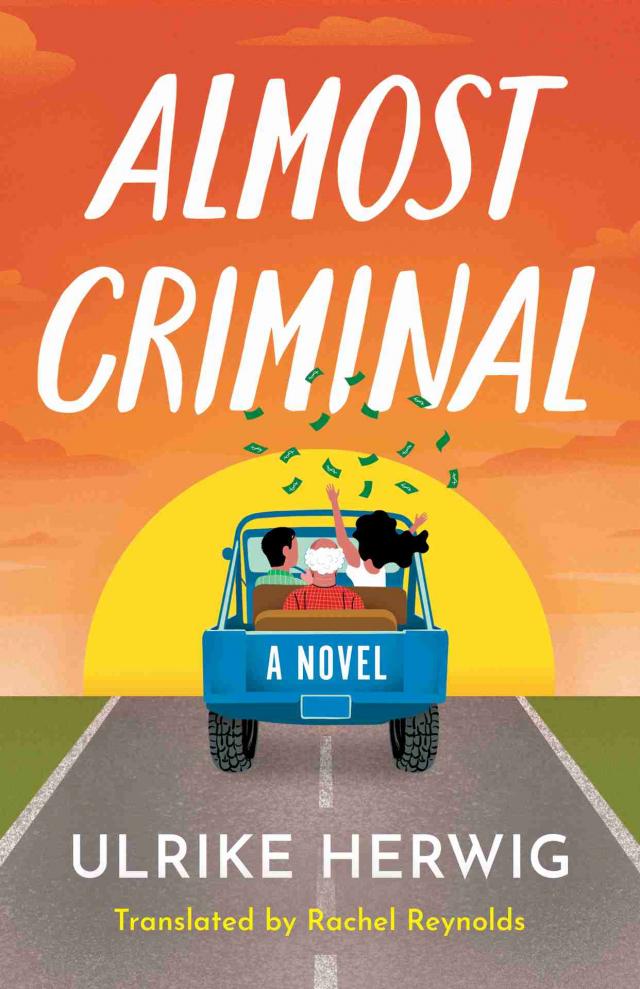
Cover illustration and design by Philip Pascuzzo
Contents
1
2
3
4
5
6
7
8
9
10
11
12
13
14
15
16
17
18
19
20
21
About the Author
About the Translator
1
The day started out as a run-of-the-mill bad day but soon escalated into one of catastrophic proportions.
That morning, Tina had discovered that their joint account was once again overdrawn, and they would have to muddle through an entire week until the next paycheck. The fight with Markus had careened off the rails, and the mere thought of the coming week, bleak and full of noodles and ketchup and long faces, made her want to instantly bolt for Australia. By herself. But, of course, she lacked the funds for that.
Her hopelessly dull job at the Fashion World catalog did nothing to improve her mood. Quite the opposite, truth be told. Especially in light of the fact that Tina was forfeiting most of her valuable lunchtime because half of her coworkers were out sick, and some indecisive customer on the phone couldn’t make up her mind whether she wanted to order the Bermuda shorts, size XXL, in hot pink or chestnut brown. It was a pointless debate, in Tina’s opinion, since she considered them both hideous options.
She glanced over at her coworker Marion, who was sitting at the neighboring desk, halfheartedly flipping through a catalog. “Do you mean the corduroy blazer in chartreuse?” Tina heard her ask into the phone.
Tina almost broke out laughing. She and Marion had voted the corduroy blazer in chartreuse their absolute least favorite item in the spring collection. Anyone who wore it would end up looking like SpongeBob. Marion caught Tina’s eyes and rolled her own. In response, Tina pantomimed choking herself. They grinned at each other. At least Tina had one kindred spirit in this dump.
“I don’t know.” Tina’s customer now sighed on the other end of the line. “The chestnut brown is stylish, but the hot pink isn’t bad either. What do you think?”
“Both shorts are classy and very pretty.” Fingers drumming.
“Well . . . hmm.”
“Would you like to give this some more thought and call back later?” Tina suggested, as accommodating as possible. “Maybe grab some lunch”—this was as broad a hint as she could make—“and call back in an hour or so, Ms. . . .” Tina glanced at the customer number on her screen. What was her name, anyway?
On the other end of the line, the customer fell into consternated silence. Then the voice resumed, this time unmistakably insulted. “Scheller. Mr. Scheller.”
Oops!
“Oh, I . . .” Tina gulped as a thousand excuses raced through her mind, but none of them were viable. So, she decided to commit the gravest mortal sin of any customer service employee: She simply hung up.
Luckily, her boss didn’t notice anything because she was in the process of picking on poor Marion, so Tina snatched up her purse and fled out into the free, fresh air, even though it was already in the eighties in the shade, unusual for Ingolstadt, a town in Bavaria—a state in the southern part of Germany. She wanted to go to her regular baker to indulge in the one good thing this day could still offer: a crunchy ciabatta sandwich with arugula, tomato, and mozzarella. For ten minutes, the pleasure of consuming this sandwich would transport Tina to a parallel universe. To Italy, to a balmy, carefree life full of olive groves and basil, in a white cottage with a cool sea breeze and . . .
She stopped in front of the bakery, reading the handwritten sign outside in disbelief. Suddenly, the ciabatta sandwiches were 4.50 euros apiece. Had they been brushed with liquid gold, or was this some kind of joke? Why did everything seem to get pricier by the hour? Dammit! The only other place around that carried food was the gas station down the street.
“Got a euro?” a voice to her left begged. “For Morli, my cat?” The crazy old woman with the straw hat had materialized next to Tina.
She lived in one of the nearby supervised care homes and spent the whole day wandering the streets, carrying her cat around in a beach bag. No, I don’t was on the tip of Tina’s tongue. To be precise, I have five euros to my name, and they are for two sandwiches and two drinks, for today and tomorrow. If that’s even enough, considering how expensive stuff is at the gas station.
“Morli is hungry.” The old woman’s clothes were astonishingly thick for the time of year, and she smelled. She had pink cheeks like a child and was petting her cat.
Tina hesitated for a moment, then handed the woman a euro. “Of course. Here you go.”
On such an awful day as this, nothing really mattered anyway. At least I haven’t completely lost my mind, wandering around in high summer with a straw hat, a fur vest, and a cat. She was grateful for the little things.
“Thank you, dear. You’ll get that back a thousand times over!” the old woman exclaimed with a toothless smile.
Tina smiled indulgently in return. She would welcome a euro that came back to her with a thousand siblings. No question about that. First, she’d settle all those cursed bills, then treat herself to something nice—and if there was still enough left, she’d give a little to someone worse off than she was, though that bar wasn’t exactly set high. What was it they said about good karma? All good things come around again?
An Audi R8 promptly sped past them and sprayed Tina with puddle water, one final greeting from the ridiculously brief storm the night before. A young man, not much older than Tina’s son Paul, was sitting at the wheel of the car. She stared after him, stunned. How could the world be like this? How could a young person with such bad manners have so much money, while Tina and Markus, despite their annoying full-time jobs, could never get ahead? The young people were probably dealing drugs. How else could they get their hands on so much money? Just recently, a ninth-grade kid at Paul’s school had been arrested for grinding up his autism medication and selling it at a premium as crack to his classmates. That much chutzpah and entrepreneurial spirit is almost admirable, Tina thought. Sometimes there were things that could be learned from the younger generation. With the remaining four euros clutched tightly in her hand, she sighed and marched off toward the gas station.
The sallow neon light gave the station the cozy ambience of a morgue, an impression intensified by the cashier in a yellow apron who was dozing, open mouthed, behind the register. Tina looked around. Obviously the product in highest demand among drivers was beer, closely followed by sunglasses and greeting cards featuring Diddl Mouse.
Besides Tina, there were a few other people in the gas station. One man was wearing the ugliest glasses she had ever seen, a kind of orthopedic shoe for the face. He frowned as he openly read a newspaper he hadn’t paid for. Next to him, two young men in athletic pants and undershirts were expertly eyeing a pyramid of beer cans, and a woman around Tina’s age with dark rings under her eyes was sipping coffee from a paper cup in the grandiosely named Bistro Corner.
Enjoy yourself again, a poster bearing a chocolate ad mocked everyone in the store. Tina walked over to the bistro corner and studied the pathetic sandwiches, which probably had the nutritional value of a pot holder despite the few lettuce leaves peeking out coyly. The wilted pieces were quite expensive to boot. But what other options did she have? Coffee to go and a soggy croissant? Or a bag of trail mix? Tina trudged aimlessly around the dim shop. Whatever. At least it was cool in here. She would simply sit down next to the woman with the rings under her eyes and stare at the wall for the remaining forty minutes of her lunch break, just like the other woman was doing. If someone took a black-and-white picture of them, it would qualify as art. If it didn’t, the photo would simply be a snapshot of what a shitty life looked like.
The guys in the undershirts were now paying, and outside, an ambulance pulled up to a pump. The door jingled as someone stepped inside. Tina turned away. If she bought only a small bag of peanuts, she could afford a tabloid paper and lose herself temporaril y in the lives of the rich and famous. It would help her forget about her own. She reached out longingly for one of the splashy magazines. Lose 5 kilos by tomorrow! Brad and Angelina still aren’t divorced yet! Madonna is actually 78 years old! How to finally get your life under control!
A small cry came from the direction of the cash register. “Oh no!”
Had something fallen? Tina couldn’t see anything except the woman with the dark rings under her eyes, who was now covering her mouth in horror. The man with the orthopedic glasses had dropped his newspaper and put his hands up. What was going on?
“All of it. In there, make it fast!” a man’s voice ordered.
A holdup! Tina started to tremble. She couldn’t see the culprit, though, because the shelves blocked her line of sight. However, that didn’t mean he hadn’t noticed her.
“Please point the gun somewhere else. I’m doing it!” The cashier was now sobbing.
The guy was armed—oh God! Tina ducked down and hid behind the candy display, wishing she could crawl inside a box of gummy bears.
“Hurry up!” the voice commanded again.
Something about the voice struck Tina as familiar. Could it be someone she . . . ? Tina glanced up cautiously at the large mirror on the ceiling, which was mounted in such a way that you could see the entire store. What she saw made her gasp. This couldn’t be happening. No—surely not . . . She crouched, frozen, stunned, unable to move or respond. The man standing at the counter and holding a pistol in his right hand, trained on the ashen cashier—the man in the striped casual shirt that was always so hard to get ironed, the man with the frantic look, the armed, ice-cold culprit—was none other than Tina’s own husband, Markus. According to all rules of reason, he was supposed to be restocking shelves at the supermarket where he was in charge of stuff like beverages and cornflakes and shampoo.
“Markus?” Tina whispered in confusion. “What in the world are you doing?”
Of course, he couldn’t hear her. He didn’t seem to be registering anything except the bundle of bills that the cashier was throwing into the open Aldi bag. Only a few days ago, Tina had used that very bag to carry home butter, laundry detergent, and cottage cheese, and now Markus was using it for an armed robbery. Had he lost his last bit of sanity at that stupid supermarket, somewhere among the frozen peas and the bathroom cleansers? Tina stood up reluctantly.
“Get down!” the other woman hissed in horror, but Tina ignored her.
“That’s all there is,” the cashier insisted pleadingly, pointing at the empty drawer. “Honestly, I swear!” The woman had started hiccupping in all her panic.
Markus spun around abruptly and strode toward the door. “No police, got it?” he shouted back over his shoulder.
“All right, I . . . well . . . shit . . .” The shocked cashier was gripping the empty cash register tightly as the door swung shut behind Markus. Tina raced after him.
“Stay here, don’t be stupid!” the cashier shouted. “He’s armed!”
“That’s my husband!” Tina yelled back.
“Someone call the police,” the man with the glasses croaked from his corner.
Tina pushed open the outside door, the packet of peanuts still in her hand. Whatever. But where was Markus? Where was his car? He was nowhere to be seen. The only vehicle outside was the ambulance whose mustached driver was just screwing on the gas cap. Somebody gave him a shove. Markus.
“Scram! Get out of here!” Markus waved his pistol in the face of the astonished driver, who let himself be pushed aside. In one fluid movement, Markus swung himself into the driver’s seat and started the engine. And with another fluid movement, Tina yanked open the passenger door. “Markus! Have you lost your mind?”
“Tina.” Markus stared at her as if the ghost of Hamlet’s father had suddenly materialized among the gas pumps. “What . . . Why are you . . . ?”
“Police!” somebody shouted. “Help! Robbery!”
“Come on.” Markus leaned over and hauled Tina into the passenger seat. “We have to get the hell out of here. Hurry and shut the door!”
Later on, Tina couldn’t have said why she did what she did. Maybe it was the sight of the woman with the dark circles under her eyes and the lukewarm coffee that had so perfectly mirrored Tina’s own dismal existence. Maybe it was the frustration she’d felt over the unobtainable ciabatta sandwich. Maybe it was fear related to the complaint Mr. Scheller would probably lodge that afternoon. Maybe it was just reflex. Whatever it was, she climbed in.
Markus revved the engine, shifted into first gear, and tore off like a madman. In the distance, police sirens started to howl.
2
For a few seconds, neither of them said a word, and then they both started talking at once.
“Markus, you’ve lost your mind. You’ve obviously completely lost your mind. I—”
“I can explain everything, Tina. I swear I didn’t mean to hurt anyone. I swear!”
Tina took a deep breath. “Where did you get the pistol? Who sold it to you?”
Markus avoided making eye contact. “More Than Just Balls.”
“What?”
“It’s from More Than Just Balls.”
“Are you serious? Markus, that isn’t even funny. What do you mean?”
“More Than Just Balls. The toy shop down on the square, dammit.” Markus barely managed to miss an oncoming truck barreling down the narrow street. “Crap!”
“A toy gun?”
“Of course, what do you think? That I’d run around with a real one?! I’m not crazy.”
“That’s not what it looks like. At the moment, you’re acting pretty crazy. Wait, do you hear that?” Tina opened her window; police sirens were still wailing in the distance. “Do you hear that? They’re coming to get you.”
“To get us. You’re involved, too, you know.”
Tina opened her mouth to protest, but then it dawned on her that Markus was right. She was involved. The salesclerk would give her witness statement and tell the police that there was a second suspect, a woman, who had been hanging around the shop, probably to keep the other people under control. And then, after the successful robbery, she had immediately jumped in the van with the burglar after claiming he was her husband. And she had stolen the peanuts as well! Tina angrily hurled the nuts onto the floorboard. What was the saying? In for a penny, in for a pound. For God’s sake, how could Markus do this to her? He had developed a few strange quirks recently, such as his obsession with the idea of breeding and selling koi fish (end result: five dead giant fish in their bathtub) and tramping across the fields on Sundays with his metal detector in search of old coins (end result: countless bottle caps and soft drink tabs, in addition to two dental caps). But this surpassed everything else. On top of it all, he was now racing at least twenty miles above the speed limit.
“Slow down!” she shouted angrily. “Do you want to get us killed? Or arrested? Or both?”
Markus slammed on the brakes, and the van lurched. Tina held on for dear life.
“Shit!” he cursed. “Since when has there been a detour here?”
“Where do you want to go? Do you mind sharing that with me? Perhaps somewhere like home?” Tina forced her voice to remain calm, but all she could produce was a stressed squeak.
Home. Half of their fellow residents would be sitting on their balconies by now, eagerly watching everything happening down on the street. An ambulance rushing up at breakneck speed and the Michels barreling out of it with an Aldi bag full of cash would be a welcome change to the never-ending parade of geraniums and trash cans and mail carriers.
“We need to get out of town,” Markus replied, glancing nervously left and right before speeding through the intersection. “Thank goodness the gas tank is full.”
The tank was full, marvelous. Then everything was just grand. Tina gave a short, hysterical snort. “I can’t believe it. Then what?”
“No idea! It wasn’t like I planned this. I didn’t plan anything. I did it on the fly, all right? I was just fed up with everything. And you kept going on and on about how broke we were, and then that thing with the car—” He broke off and, to Tina’s dismay, hastily wiped his eyes.
“What about the car? Markus?” Tina placed a hand on his arm.
“Junk metal. That’s what it is. Totaled. I hit a streetlight because I was staring at my phone. Now you know. My phone went off, and I thought it might be a text from the company I applied to last week. Because my store is about to be bought out. By Aldi, of all companies!” He gave the innocent plastic bag on Tina’s lap an angry poke.






